Which marine technologies are closest to real-world use in the Baltic Sea?
New technologies alone will not shape the future of the Baltic blue economy. Just as important is whether the region can create the right conditions to test, adapt and bring them into real-world use.
The blue economy covers economic activities taking place at sea and along the coast, including ports, maritime transport, shipbuilding, offshore wind, fisheries and aquaculture. The development of these sectors increasingly depends on technologies that can help us use marine resources more wisely while reducing environmental impact.
MarTe is a joint Estonian-Latvian Horizon Europe project that brings together researchers, companies, public authorities and coastal communities. MarTe looks at the barriers slowing down maritime innovation and at what needs to change for new technologies to move more quickly towards practical use.
As part of the project, more than 50 marine technologies were mapped and assessed according to their relevance and readiness for the Baltic Sea Region. Some of the strongest areas include smart ports, greener maritime transport, autonomous solutions, environmental monitoring and digital tools. Sustainable aquaculture, offshore renewable energy support technologies and alternative fuels also stand out as promising fields.
These are not distant future concepts. They are areas where the Baltic Sea Region can already test solutions, build experience and learn what works under local conditions.
“The Baltic Sea Region does not need to copy the development models of Germany or the Nordic countries. Estonia and Latvia have an advantage in their flexibility and in the opportunity to bring researchers, companies, ports and the public sector around the same table relatively quickly.
MarTe’s role is to help promising marine technology ideas move from testing towards products and applications that strengthen the regional economy without putting additional pressure on the marine environment. When the different actors understand why something is being done and where it can lead, their interests and activities can start reinforcing each other.”
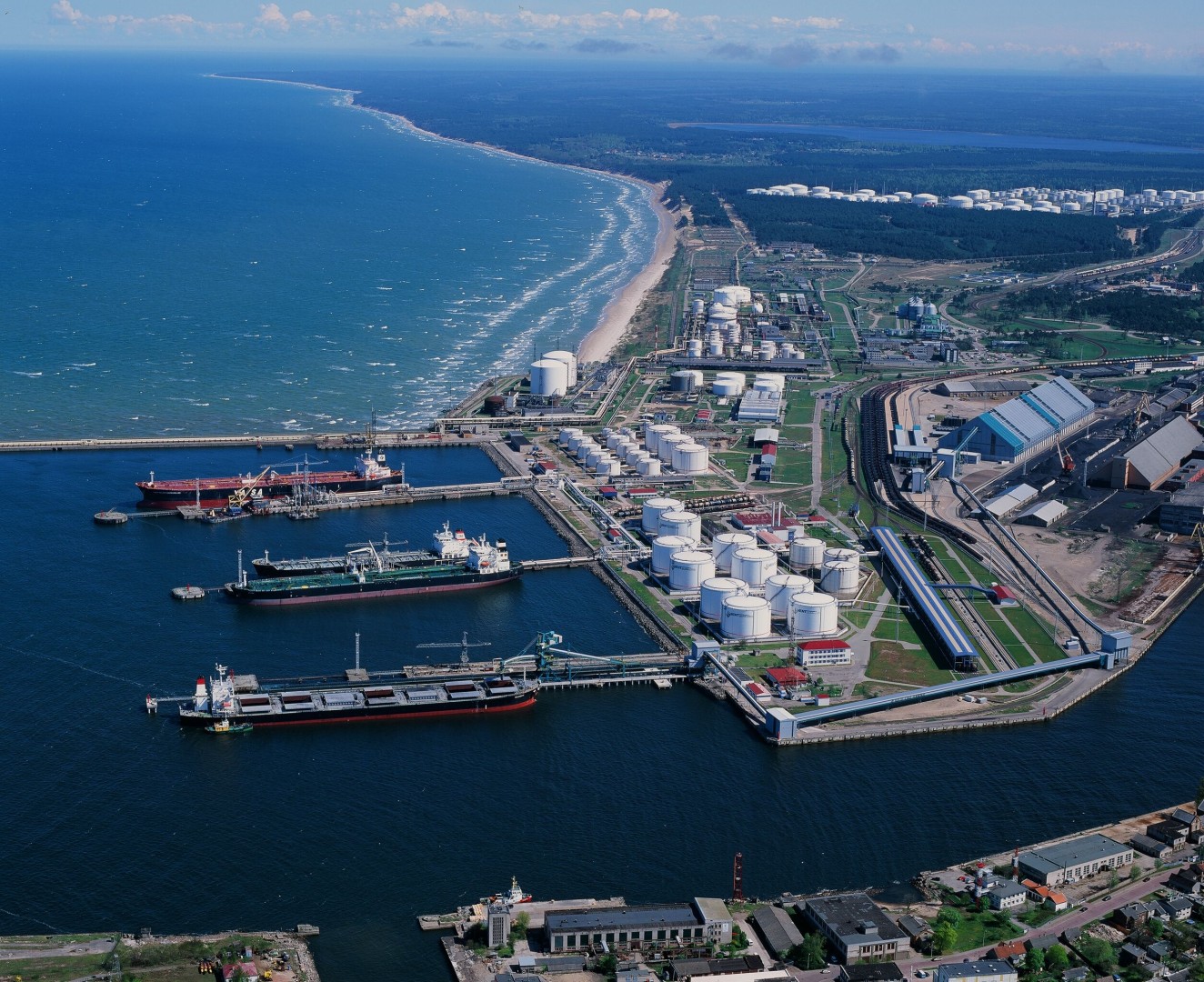
Ports are looking for a new role
Many ports in the Baltic Sea Region have relied on transit trade for decades. That business model is now under growing pressure. Geopolitical changes, sanctions, shifting trade flows and the transition away from fossil fuels have reduced the importance of activities that once provided ports with a relatively stable foundation.
This is pushing ports to rethink their role. Alongside traditional cargo handling, they can increasingly support offshore wind, new fuel solutions and the testing of emerging technologies.
Ports are particularly important because they are where land and sea meet. They are therefore becoming increasingly important hubs where energy, industry, technology and the use of marine space intersect.
The most difficult part of offshore wind may not be offshore
The Baltic Sea has significant potential for renewable energy production. Estonia and Latvia have favourable wind conditions and designated areas for future development. Offshore wind could help reduce dependence on fossil fuels, strengthen regional energy security and create new opportunities for ports, service companies and engineers.
But offshore wind requires much more than turbines at sea. It depends on an entire system: grid connections, cross-border planning, energy storage, flexibility in the electricity system and ways to convert renewable electricity into fuels such as hydrogen, methanol or ammonia.
At the same time, offshore wind developments affect shipping routes, fishing, port operations and the relationship coastal communities have with their marine areas. Offshore wind is therefore not only an energy question, but also one of planning and agreement between different interests.
Ports may play a central role in this system. Vessels, equipment and services needed for construction and maintenance move through them, and in the future ports could also help connect energy produced at sea with industry and new fuel solutions on land.
A digital twin of the sea can show what might happen next
A marine digital twin is, in simple terms, a virtual model of the sea that combines information from different sources and allows users to explore what might happen under different scenarios.
A great deal of data is already collected about the Baltic Sea, but individual measurements do not provide a complete picture of how the marine environment works. A digital twin can bring together monitoring data, satellite imagery, measurements, models and forecasts into a more coherent view.
Sea ice is a good example of why this matters. Although the long-term trend is towards less ice in the Baltic Sea as the climate warms, this does not mean that every winter will be equally mild or ice-free. Year-to-year variation remains considerable, and the 2025/2026 winter showed that even a relatively short ice season can still produce a normal maximum ice extent.
For offshore wind developments planned in more northerly parts of the Baltic Sea, detailed knowledge of ice conditions therefore remains important. Ice affects foundation design, maintenance operations, vessel traffic and safety.
Digital twins can also help assess the combined impact of different developments. A single wind farm or aquaculture site may appear relatively limited when considered on its own, but when several activities take place in the same marine area, their location, timing and cumulative effects become increasingly important.
These tools do not make decisions for people. They can, however, help decision-makers understand risks, compare alternatives and plan the use of marine space more intelligently.
The future of the Baltic blue economy will therefore depend not only on which new technologies emerge, but also on how successfully we connect knowledge, decision-making and the interests of different stakeholders with the needs of the marine environment.
The future of the Baltic blue economy will therefore depend not only on which new technologies emerge, but also on how successfully we connect knowledge, decision-making and the interests of different stakeholders with the needs of the marine environment.



Funded by the European Union under Grant Agreement ID 101186498. Views and opinions expressed are however those of the author(s) only and do not necessarily reflect those of the European Union. Neither the European Union nor the granting authority can be held responsible for them.