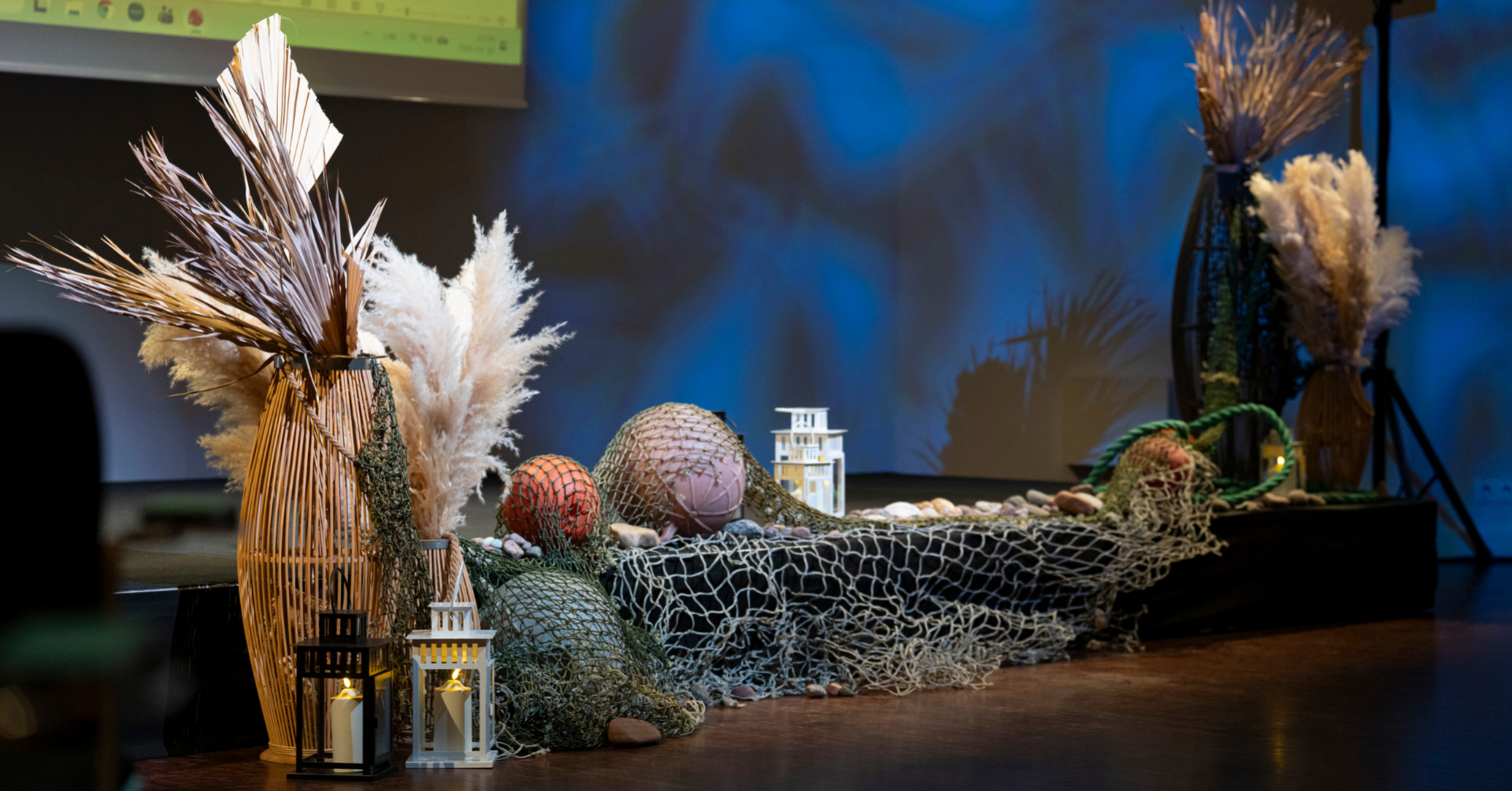
Marine Synergies Forum highlighted the Baltic Sea’s potential for smart blue economy growth
On 16 April 2026, the Marine Synergies Forum took place in Liepāja, Latvia. The event focused on multi-use marine development: how the same sea area can support several compatible activities, such as offshore wind energy, aquaculture, testing and environmental monitoring. The discussions also explored how the Baltic Sea can support innovation, sustainable growth and stronger cooperation between research, business and the public sector.
Representatives from MarTe partner organisations, including the Latvian Institute of Aquatic Ecology, Kurzeme Planning Region and the Investment and Development Agency of Latvia, shared perspectives on questions that are central to MarTe’s work. These included marine technologies, innovation support, bioeconomy solutions and the practical conditions needed for sustainable blue economy development.
The forum highlighted that the Baltic Sea can be more than a natural resource. It can also be a platform for smart growth, sustainable innovation and stronger cooperation across the region.
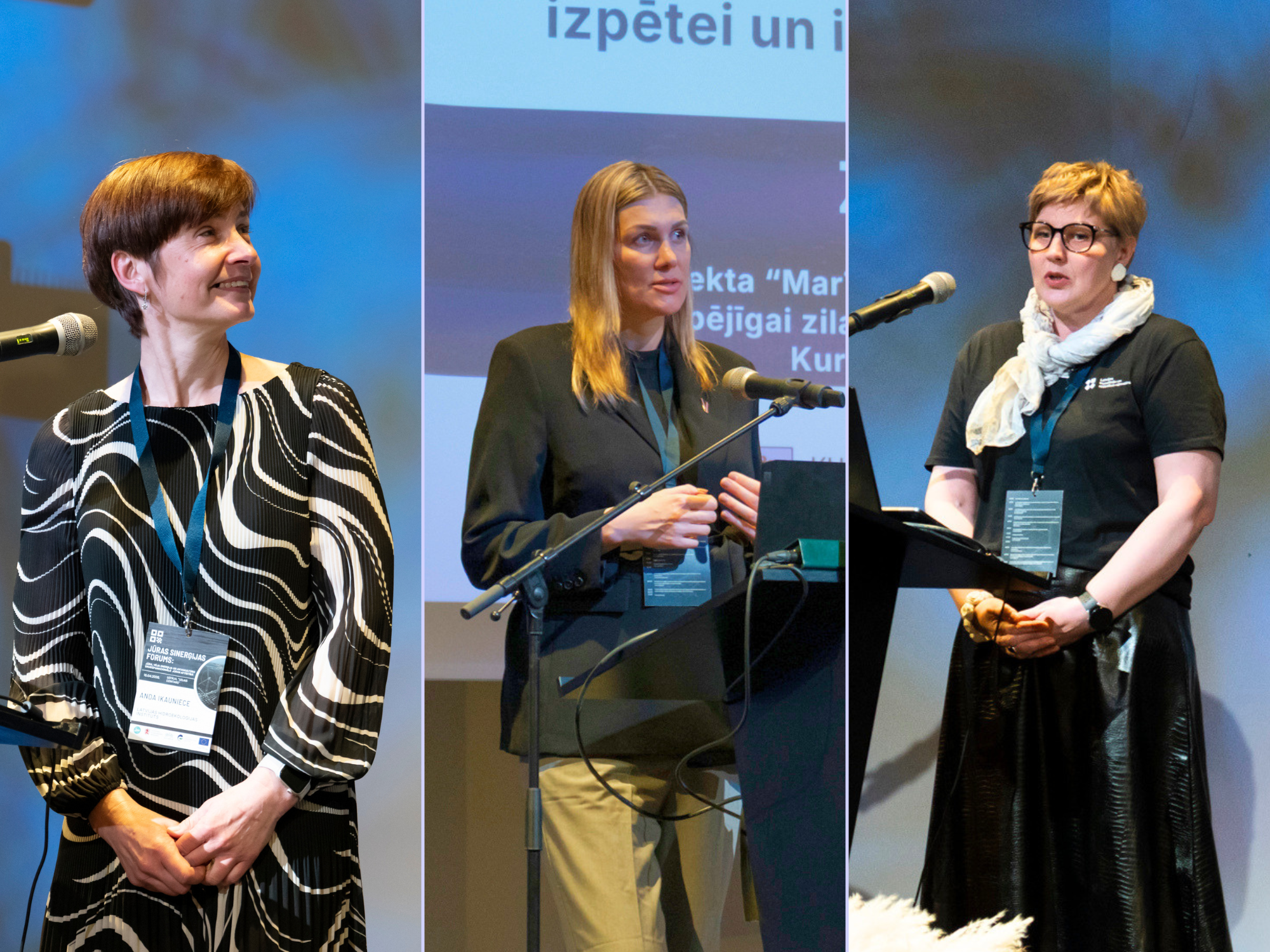
Representatives from MarTe partner organisations at the Marine Synergies Forum in Liepāja: Dr Anda Ikauniece, Zane Gusta and Inese Skapste.
Technology is essential for sustainable marine development
Dr Anda Ikauniece from the Latvian Institute of Aquatic Ecology, one of the MarTe partner organisations, underlined that offshore wind and aquaculture cannot develop successfully without advanced technologies. Drawing on European and global trends as well as stakeholder input from Latvia and Estonia, she highlighted the importance of autonomous systems and robotics for marine monitoring and infrastructure maintenance. She also pointed to digital tools such as digital twins — virtual models of real sea areas or infrastructure that can support better planning and management of marine space.
The discussion also focused on technology synergies. One example is the multi-use of offshore wind areas, where wind farms could also serve as platforms for aquaculture, testing and environmental monitoring. Another important direction is the combination of alternative energy and regenerative aquaculture. In this approach, species such as algae or mussels are cultivated to produce useful biomass while also helping to restore the marine environment.
These examples show how marine technologies can create economic value while also supporting environmental goals. To make such solutions work in practice, researchers, companies and public authorities need to be involved from the early stages of development.
Innovation needs the right support system
Zane Gusta, Project Manager at Kurzeme Planning Region, a MarTe partner organisation, stressed that technologies cannot develop in isolation. Ideas need the right support system to move from research to practical use. This includes cooperation between researchers, companies, public authorities and organisations that help new solutions reach the market. Together, these elements form the innovation ecosystem needed around marine technologies.
She pointed out the need to strengthen marine technology research, innovation and knowledge transfer in the coming years. This includes a joint blue economy development strategy, policy recommendations for more effective and sustainable use of marine space, new research projects and support instruments for companies, such as consulting, mentoring and support for pilot projects.
This also connects closely with MarTe’s work. The project brings together partners from Estonia and Latvia to strengthen cooperation between research, business and the public sector. This cooperation helps create better conditions for testing and developing marine technology solutions.
From sea to field: macroalgae as a resource
A practical example of cross-sector blue economy innovation was presented by Inese Skapste from the Investment and Development Agency of Latvia, one of the MarTe partner organisations. Drawing also on her research work at the Latvia University of Life Sciences and Technologies, she showed how marine resources can support more sustainable agriculture.
Her presentation focused on how Baltic Sea macroalgae could become a resource for sustainable agriculture. Macroalgal biomass can be used to produce plant biostimulants, biogas and compost. In this way, one marine biomass stream can lead to several useful products and create a link between marine environmental challenges and circular bioeconomy solutions. This is especially relevant in the Baltic Sea, where excess nutrients contribute to eutrophication, leading to excessive algae growth and poorer water quality.
Such solutions could reduce dependence on imported mineral fertilisers, lower environmental pressure and create new income opportunities for farms. They also show how science-based innovation can support both environmental protection and business development.
Clear rules and testing opportunities are needed
Another perspective from the Investment and Development Agency of Latvia was provided by Jānis Ločmelis, Head of the ELWIND Project Unit. He focused on what is needed to move from ideas to implementation: technically feasible designs, clear rules, safe operating conditions and opportunities to test new approaches in real sea conditions.
For such projects to move from ideas to practice, clear rules and safe testing conditions are essential. Marine space also needs to be planned carefully, so that offshore wind, aquaculture, environmental protection and testing activities can work alongside each other. Clearly defined multi-use zones, aligned licensing and safety requirements help reduce uncertainty and make real-life testing possible in sea conditions.
The discussion showed that clear rules, safe testing conditions and a practical business outlook are all needed to move marine innovation towards investment, export potential and long-term competitiveness.
Baltic cooperation can turn ideas into practical solutions
The Marine Synergies Forum highlighted Latvia’s strong potential to develop knowledge-based marine projects that create skilled jobs, new business opportunities and practical solutions. The forum also showed that blue economy development is not only an environmental topic. It is also linked to productivity, competitiveness and the creation of higher-value jobs. But the opportunity does not stop at national borders. Across the Baltic Sea region, strong research organisations, active companies, engaged public sector partners and ongoing project initiatives can help turn marine innovation into practical solutions.
By developing marine technologies, offshore renewable energy, aquaculture and bioeconomy solutions, Estonia and Latvia can create new business and cooperation opportunities that support both economic development and the protection of the Baltic Sea.
MarTe will continue supporting this cooperation by helping partners connect research, policy, business and community perspectives in the development of sustainable marine technologies.
Photo credits: Original photos by Guna Rubule. Images cropped and adapted for the article by MarTe.



Funded by the European Union under Grant Agreement ID 101186498. Views and opinions expressed are however those of the author(s) only and do not necessarily reflect those of the European Union. Neither the European Union nor the granting authority can be held responsible for them.